I Made a Jukebox
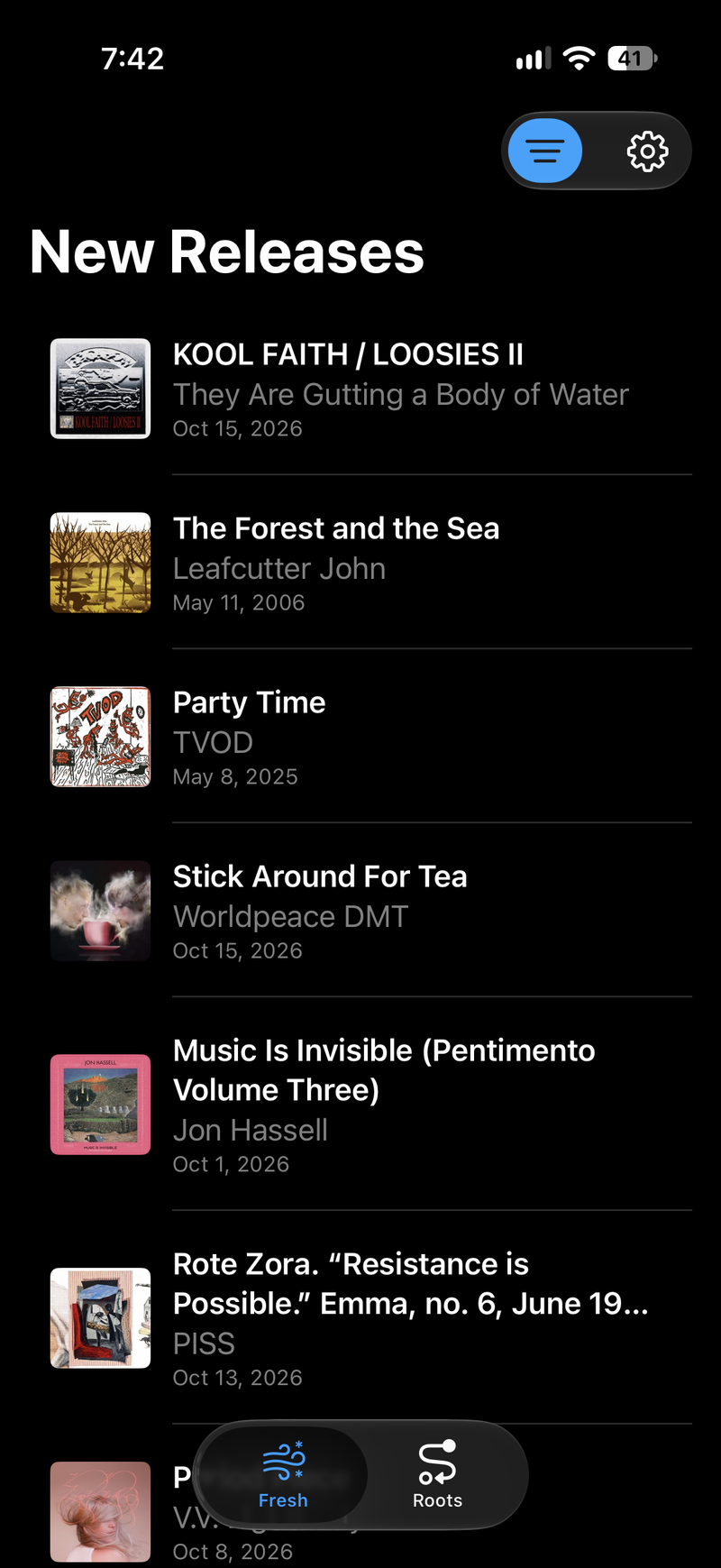
I had my first success home-cooking an app with robot assistance this weekend. After half-starts in high school, college, and covid lockdown, I could finally bring one of my tool ideas to fruition. It works, I’m using it, and it’s on my phone and my computer.
It’s a feed reader for music blogs, that lets you listen to whatever they’re writing about with one tap via your Apple Music subscription. And eventually it’ll also be a portal into specific music geeks’ record collections, but that will come later.
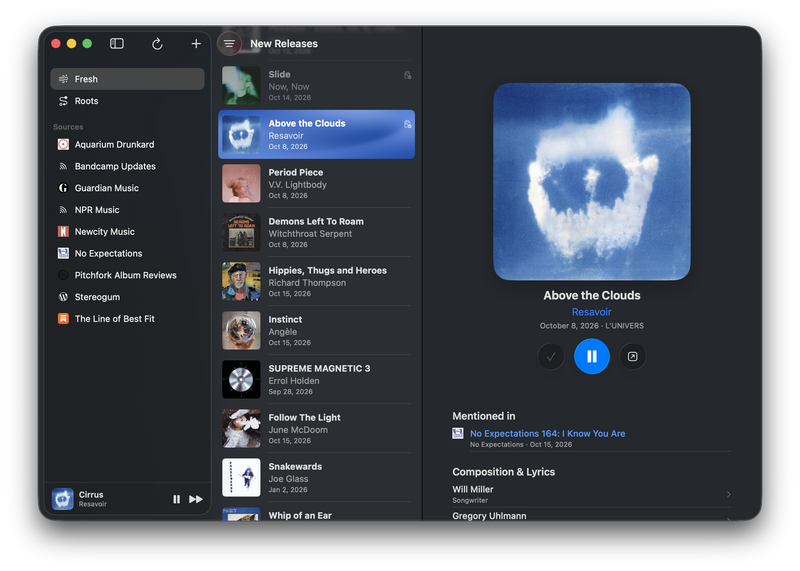
I’ve dreamed about this for years and tinkered with it, but never learned enough Swift to develop it by myself, and here the scary robot lords gave me one that could help me build it, and the first version only took a weekend.
Today I added a credits browser. When you open any record, it shows you who worked on it, and you can tap any name to see virtually everything else they’ve ever worked on. It blows my mind that credits still aren’t a first-class part of the Big Three music platforms. That’s been such a loss of the past twenty years. We went from gatefolds, to CD booklets, to iTunes PDFs, to almost nothing at all. And I don’t believe that music nerds are the only people who want to learn more about the artists they like. So my app puts credits on the first screen you see about a record.
But credits aren’t the main reason I’m working on this. I’m so turned off by platform playlisting. First of all, when you open any of the Big Three music apps, you see a cornucopia of colors and verticals and bells and whistles. I don’t want that. I just want to see records. And when I’m looking for new music to listen to, I just want to see new records. So I built that.
The second, even deeper problem, is how their playlists get built. They used to be picked by hand. Now they’re largely picked by computer analysis. And that works fine for a lot of people. I really don’t begrudge anyone who wants to plug their brain into the Mood Machine. But I like getting recommendations from human curators and music writers. So my app lets you subscribe to Pitchfork, Stereogum, and any other music source that has an RSS feed.
Which brings me to the third reason I’m building this. It is such a pain in the ass to read music websites now. Do I even need to say it? They’re suffocated by ads. I understand that the ads are part of how they keep the lights on. (Well, part of how somebody, in one of the estates in the Condé Nast Newhouse family, keeps some of the lights on.) But it has ruined the experience. They dug out their value from underneath their own feet. So until someone revives The Deck or they take a cue from John Gruber and make ads a tolerable, or even enjoyable, experience again, I hate to visit.
And one-tap to listen is more fun anyway. My app understands what release they’re writing about and lets you listen to it instantly, without clicking on a YouTube link or searching for it yourself.
And it still links back to the music writers’ writing, so they get credit, and you can read what they had to say.
In just two days of using the test version of the app, I’ve already found like ten new records I love, that I might not have heard before.
You could say, our ancestors had to trudge up the block in the snow just to get a glimpse of a 7” they might want to buy, and they had to save up all month to buy it. And you, Spencer, are saying trudging through video ads for F-150s to get to a music link is too hard for you? Yeah, I guess I am saying that. But I also think: no matter how hard something once was, it’s only the relative improvement that matters. Easier is easier, and I like making it easier to explore music. (Or easier to make music. That’s why you leave your mics set up and your gear plugged in.)
At some point I’ll open up a list for testing. Send me an email if you want to try it.